The Chief Judge of Kogi State, Hon. Justice Josiah Joe Majebi, has assured of judiciary’s commitment to adhering to existing extant laws relating to fiscal responsibility.
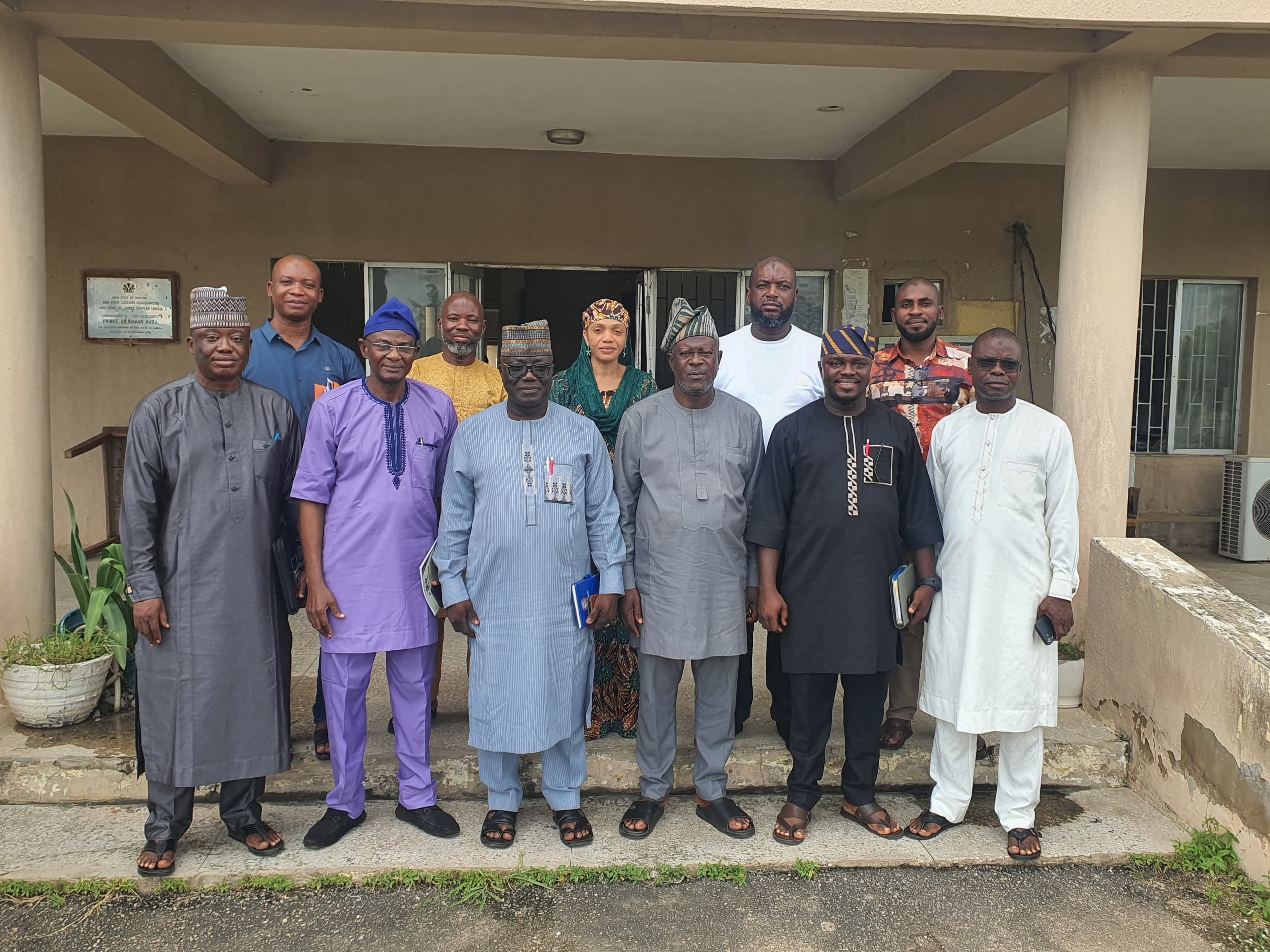
The CJ gave the assurance at the judiciary headquarters in Lokoja, the state capital, when a team from the state’s Fiscal Responsibility Commission visited the Judiciary headquarters on fact-finding mission dwelling on compliance with the state’s fiscal regulatory framework.
He was represented by the Chief Registrar, Oladimeji Ibrahim Esq., who, alongside other relevant Directors of the institution, gave the team a holistic insight of fiscal management at the High Court of Justice.
The broad-based inquiries by the team touched on budgeting, its implementation and other variables including capital budgetary executions and procurements above the threshold of N10m.
In responding, the Chief Judge affirmatively pointed to the Judiciary’s compliance with existing state government’s regulations on fiscal responsibility in all ramifications with preparedness to continue doing same.
However, while it was brought to the knowledge of the visiting committee the extent to which judiciary had improved in revenue generation for the state, it was mentioned that major parts of Judiciary’s budgets were hardly implemented despite the enormity of the institution’s needs.
This came after the introductory remarks by the leader of the team, Abubakar Tanko Musa, the Director, Plan and Strategy at the Commission, had stated that the Commission’s motif was concerned with the various aspects of financing procedures in the institution, and the Secretary of the Commission, Emmanuel Ayodele, had disclosed that the Fiscal Responsibility Law empowers the Commission to pursue and achieve it’s mandate which also includes mandating compliance by state organs, Ministries, Departments and Agencies (MDAs) to budgeting provisions and guidelines.
The Commission, he said, was put in place to further strengthen existing provisions of the law stating also that organisations in the state are not allowed to spend beyond budgetary limits. He went further to say that the provisions of the law is clear on stages of procurement as clear-cut criteria and threshold are clearly spelt out and compliance are therefore required so as to get value for money.
Hence, the essence of the visit was meant to educate, sensitize and mobilize selected institutions, which includes the High Court of Justice, to pilot a detailed assessment for eventual full compliance and enforcement of provisions of the law in the state.
With the team’s assessment focusing on the period between June 2025 to June 2026, the Commission was interested in knowing judiciary’s core mandate, appointments made, how much was budgeted and released with emphasis on the level of budgetary implementation during the period, returns and challenges to effective Justice delivery, procurement procedures outside recurrent expenditures and the extent of budgetary implementation in current fiscal year.
Directors responded severally to questions raised with the visitors consequently made to understand that funds were not usually released for capital projects. Aside that, they were told that the retinue of professional personnel at the court’s Directorate of Estate Management have been reduced to complementary roles while agents of the state government execute judiciary projects for the High Court such as the renovation of existing court structures for the recently established Small Claims Court.
Review of the High Court and Area Court’s Civil Procedure Rules, which increased revenues generated by High Court, were listed among achievements recorded by the institution during the period and it received commendation from the visitors who had frowned at the economically unrealistic levies, fees and fines previously charged by courts before they were informed of the changes made.
Other listed achievements in the period were establishment of the Surveillance and Intelligence Unit just as the reviewed Civil Procedure Rules were new measures that had improved and made access to justice at the High Court and lower courts seamless.
In responding to the challenges facing the institution, the team was told that it has become notable that the Estate Department, despite it’s full retinue of professionals, no longer execute projects as the few renovations witnessed during the period were executed by the state’s Ministry of Urban Development.
It was also mentioned that challenges confronting other stakeholders in justice delivery contribute immensely to factors hampering smooth and effective Justice administration process in the state as such challenges often result in delayed trials.
Other challenges disclosed were inadequate office accomodations for staff, nonavailability of structures for special courts and inability to fully deploy ICT for court management due to lack of facilities. All these challenges were concluded to be tied to the paucity of fund bedeviling the judiciary as an institution. They were as well linked to non-release of budgetary allocations which the team said was part of what informed the visit as the state was already interested in correcting identified fiscal lapses.
The team was particularly made to understand the enormity of the responsibility of the High Court of Justice, under which exist divisions of the High Court and very large numbers of lower and special courts spread across the state.
In the team’s entourage was also Mr. Joseph Bello, the Commission’s Director of Monitoring and Evaluation while the High Court’s Directors of Finance and Supplies, Dr. Ahmed Usman; PRS, Mrs. Aisha Attah-Abdallah, DPM, Iregu Kabir and Protocol, Hussain Adamu, were present. Heads of Departments for the ICT, Umar Hussain, and Information, Saqeeb Saeed, were also in attendance. The Director for Estate Management and Projects, Arc. Justice Akwu, was ably represented by his assistant, Engr. Ibrahim Abdullahi.
*Information Unit, High Court of Justice, Lokoja, Kogi State.*
Husseini Abubakar- Editor Newsnowwxpress.