By Eneojo Herbert Idakwo
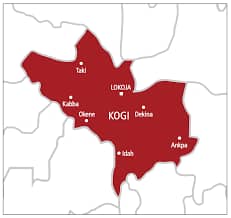
On August 27, 1991, the creation of Kogi State was announced by the military government of General Ibrahim Babangida. Formed from parts of Kwara and Benue, the new state was expected to leverage its strategic geography, rich resources, and cultural diversity to become a hub of economic and political influence.
As the State turns 34, it is necessary to go beyond celebration and undertake a critical appraisal of how far it has come, where it has faltered, and what must be done to reposition it as a true “Confluence State” in more than name.
Governance and Leadership
The story of Kogi cannot be separated from the quality of its leadership. From Prince Abubakar Audu, the pioneer civilian governor, through Ibrahim Idris, Idris Wada, Yahaya Bello, and now Usman Ododo, each administration has left mixed legacies.
While Audu’s tenure is still remembered for foundational projects like the establishment of Kogi State University and early infrastructural push, later governments struggled with consistency. Leadership has too often been defined by ethnic balancing, Igala dominance in the early years, then Ebira ascendancy, with Okun voices frequently lamenting marginalization.
The consequence is a politics driven more by rotation and rivalry than by a coherent development agenda. Transparency, fiscal discipline, and accountability have been recurrent deficits, slowing the state’s overall growth trajectory.
Economic Potentials vs. Reality
Kogi is resource-rich but revenue-poor.
Solid Minerals: Iron ore (Itakpe), limestone (Obajana, Jakura), coal (Ankpa), crude oil in Ibaji, marble, and other deposits give Kogi one of the richest mineral profiles in Nigeria. Yet, poor regulation, illegal mining, and lack of industrial-scale beneficiation mean little value accrues to the state.
Ajaokuta Steel Company: Conceived as Africa’s largest steel project, it remains Nigeria’s most infamous industrial white elephant. Successive administrations, both federal and state, have failed to revive it. Its dormancy has robbed Kogi of industrial leadership.
Agriculture: Kogi has vast arable land producing yam, cassava, rice, cashew, cocoa, palm produce, and maize. But low mechanization and poor market access restrict its contribution to food security and export.
Internally Generated Revenue (IGR): Despite its resources, Kogi’s IGR remains modest, often under 20% of its total budget, reflecting underutilization of assets.
The economy remains overdependent on federal allocation, a vulnerability that stifles innovation and sustainability.
Infrastructure and Urban Development
Lokoja, as capital, carries historical prestige as the first administrative capital of Nigeria. Yet, its physical development lags behind expectations. Inadequate urban planning, inconsistent water supply, poor road networks, and insufficient housing highlight the gap between symbolism and reality.
Across the state, many roads are dilapidated, healthcare facilities underfunded, and rural electrification patchy. The Lokoja-Abuja highway, despite being a lifeline, remains perennially plagued by gridlock and accidents.
Kogi’s central location should have made it a transport hub with rail, road, and river synergy. Instead, it remains underexploited, with River Niger and River Benue offering untapped possibilities for inland waterway transport.
Education and Human Capital
The establishment of institutions such as Prince Abubakar Audu University, Confluence University of Science and Technology, Kogi state University, Federal University Lokoja, and technical colleges has expanded access to higher education. Literacy rates have improved, and Kogi produces a steady stream of graduates.
However, the mismatch between education and employment opportunities is stark. Graduate unemployment and youth underemployment remain high, fueling migration, restiveness, and insecurity. Technical and vocational education, critical for industrialization, is still underdeveloped.
Security Challenges
Insecurity is one of Kogi’s deepest wounds at 34. Once considered relatively safe, the state has in recent years been plagued by:
Kidnapping on highways and rural areas.
Banditry and communal clashes.
Criminality linked to youth unemployment and political thuggery.
Though successive governments have launched security operations, the persistence of violence undermines investment, agriculture, and tourism.
Tourism and Culture
Kogi holds immense cultural and tourism potential: Mount Patti, the Confluence of Rivers Niger and Benue, colonial relics in Lokoja, Ojuwo Atogwu in Idah, Igala and Ebira masquerades, Okun festivals, and traditional arts. These should make it a Nigerian tourism jewel.
Yet, weak investment, poor promotion, and insecurity mean Kogi’s tourism remains largely untapped, surviving more in oral history than structured economic contribution.
Appraisal: Scorecard at 34
Governance: Inconsistent, marked by ethnic politics and weak accountability.
Economy: Vast potential but underperforming; overreliant on federal allocation.
Infrastructure: Inadequate relative to strategic location.
Education: Expanding access but weak job alignment.
Security: Deteriorating, discouraging investors and tourists.
Culture/Tourism: Rich but underexploited.
In short, Kogi has not met expectations. The vision of becoming a model industrial, agricultural, and cultural hub has remained more potential than reality.
The Road Ahead
For Kogi to unlock its destiny, critical reforms are urgent:
Revive Ajaokuta and Mineral Processing, Partner with credible investors to operationalize steel and mineral industries.
Agricultural Value Chains, Invest in mechanization, agro-processing zones, and export channels.
Infrastructure Overhaul, Prioritize roads, water, electricity, and ICT.
Inclusive Governance – Move beyond ethnic politics to merit-driven leadership.
Security Sector Strengthening – Community policing, technology-driven surveillance, and youth engagement.
Tourism Development, Package Lokoja and cultural sites into viable tourist attractions.
Education-Industry Linkages – Align curricula with market skills, emphasizing entrepreneurship and technical training.
Conclusion
At 34, Kogi stands as a study in paradox: rich yet poor, strategic yet underutilized, diverse yet divided. The state has the capacity to lead Nigeria in steel, agriculture, logistics, and culture, but this requires a new leadership philosophy, one that sees beyond ethnic divides and short-term gains.
A critical appraisal shows that Kogi has underperformed relative to its resources, but with visionary leadership, accountability, and strategic investment, the Confluence State can still rise to fulfill the promise that inspired its creation in 1991.